
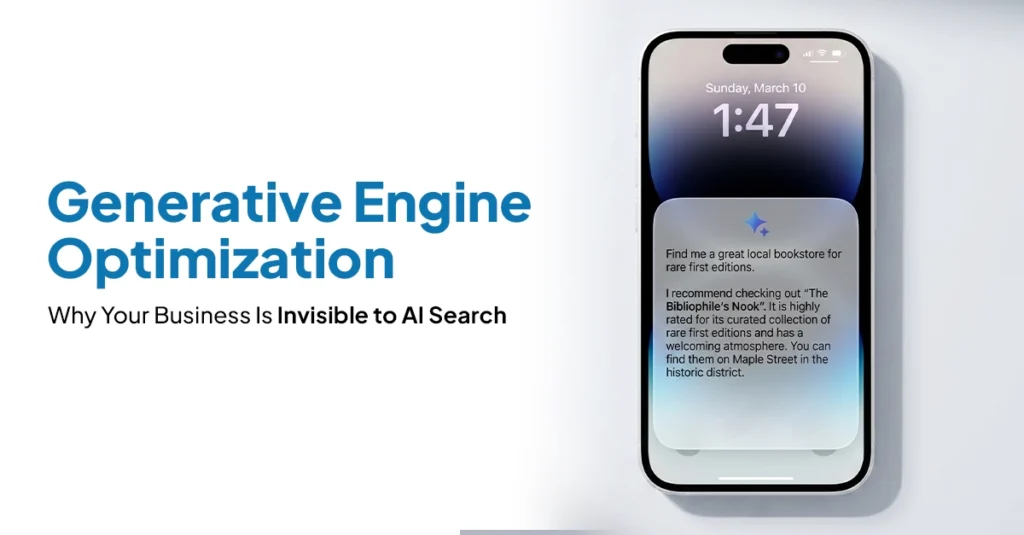
Your potential customers are asking ChatGPT, Perplexity, and Google AI which businesses to hire, which tools to buy, and which services to trust. Right now, while you’re reading this, those AI engines are generating answers: and recommending your competitors.
Not because your competitors are better. Because their content is structured in a way AI engines can read, extract, and cite. Yours probably isn’t.
This is the core problem of generative engine optimization (GEO): it’s a visibility gap that won’t show up in your Google Analytics. You won’t see a traffic drop that tells you what happened. Customers just stop finding you: through a channel you may not even know exists yet.
This guide explains what GEO is, why it’s now a non-negotiable part of running an online business, and the exact steps founders can take to stop being invisible to AI search.
Why AI Search Is Not Optional in 2026

The numbers that should change how you think about visibility have arrived, and they’re not subtle.
According to Bain & Company, 80% of search users now rely on AI-generated summaries for at least 40% of their searches. Google AI Overviews appear on billions of searches monthly and now show up in approximately 25% of all Google searches: nearly double the rate from just months prior. ChatGPT processes queries from over 700 million weekly active users.
Here is the part that most founders miss: AI referral traffic converts at roughly twice the rate of traditional organic search traffic, in about one-third the number of sessions, according to Conductor’s 2026 AEO/GEO Benchmarks Report. These are not casual browsers. These are high-intent buyers who asked an AI a specific question and received a recommendation.
According to Gartner, traditional organic search traffic is projected to decline 25% through 2026 as users shift toward AI-assisted answers. Meanwhile, the GEO market was valued at $848 million in 2025 and is on a trajectory toward $33.7 billion by 2034: a 50.5% compound annual growth rate, according to Smart Business Revolution citing multiple industry sources.
The window for first-mover advantage is still open. Fewer than 12% of marketing teams have a documented GEO strategy, according to GenOptima research. That means the founder who moves now builds citation authority before competitors even understand the problem.
What Is Generative Engine Optimization (GEO)?
Generative engine optimization (GEO) is the discipline of optimizing your content, website structure, and brand presence so that AI systems select and cite you as a trusted source when generating answers for users.
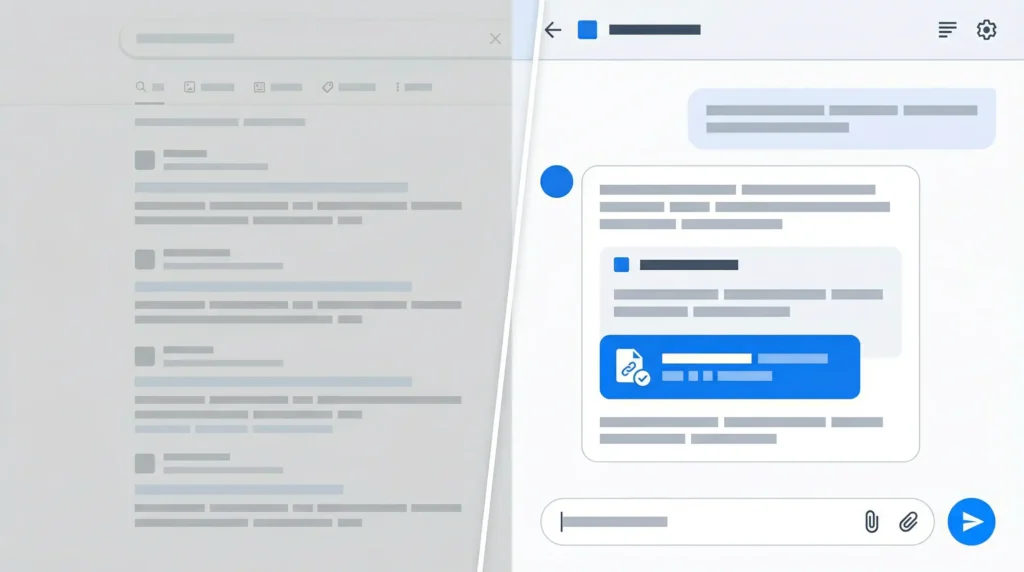
Traditional search engine optimization (SEO) puts you on a list. GEO puts you in the answer.
When someone searches Google, they get ten blue links and choose one to click. When someone asks ChatGPT or Perplexity the same question, they get a direct answer synthesized from multiple sources: with your brand either cited or completely absent. There is no position 2 in that response. You’re either in it or you’re not.
GEO vs. SEO: What’s Actually Different?
GEO and SEO overlap significantly, but they optimize for different end goals.
SEO optimizes for ranking position on a search engine results page. GEO optimizes for inclusion as a cited source inside an AI-generated response. A page can sit at the #1 position on Google and never appear in a single ChatGPT or Perplexity answer if it lacks the structural elements AI engines prioritize.
The key differences:
- Goal: SEO = clicks from rankings. GEO = citations inside AI answers.
- Algorithm: SEO responds to backlinks, page speed, keyword density. GEO responds to content structure, directness, entity clarity, and citation signals.
- Measurement: SEO tracks position and organic traffic. GEO tracks brand mentions, share of model, and AI referral traffic.
- Platforms: SEO targets Google and Bing. GEO targets ChatGPT, Perplexity, Google AI Overviews, Gemini, Copilot, and Claude.
Why Ranking #1 on Google No Longer Guarantees Visibility
Research on ChatGPT citation patterns found that only 12% of pages cited by ChatGPT overlapped with Google’s top-ten results for the same queries, according to analysis by lowtouch.ai. That is a striking disconnect.
Additionally, 65-70% of all Google queries now end as zero-click searches, where the AI Overview answers the question directly on the results page and no one clicks through. Ranking well drives less traffic than it used to: and AI citation is becoming what determines whether a visit happens at all.
How AI Engines Decide What to Cite (And Who Gets Ignored)
AI engines do not pick citations randomly. They apply a set of evaluation signals that have almost nothing to do with how your content ranks on Google.
The 3 Signals That Determine AI Citations
1. Content Structure and Directness
AI systems extract answers from the opening content of pages. According to Enrich Labs, the first 200 words of any article should directly and completely answer the primary query: not build up to the answer. Sections that open with a self-contained definition or direct answer are extracted at 2.8x the rate of sections that don’t, according to GenOptima research.
2. Authority and Trust Signals
Google’s E-E-A-T framework: Experience, Expertise, Authoritativeness, Trustworthiness: has become a citation signal across AI platforms, not just Google Search. Named authors with verifiable credentials, third-party mentions in trade publications and review sites, and consistent brand presence across multiple platforms all feed this signal.
3. Schema Markup and Structured Data
Stacked JSON-LD schema markup (Article + FAQPage + Organization) significantly increases the probability of AI extraction. Schema tells AI engines exactly what your content is, who published it, and what questions it answers: in a format machines parse without ambiguity.
Why Most Small Business Websites Fail the AI Readability Test
Most small business websites are built for visual appeal, not machine readability. Content is buried in sliders, hero sections with images and no text, PDFs that AI can’t crawl, and paragraphs that take 300 words to get to the point.
According to the US Chamber of Commerce, if your content is not structured and contextualized in a way that allows AI models to understand and trust it, you risk being invisible. That invisibility is happening right now, to businesses with strong Google rankings and healthy traffic, simply because they never structured their content for the AI layer.
How to Start Optimizing for GEO: A Founder’s Checklist
Starting GEO does not require rebuilding your entire website. It requires a structured, methodical approach applied to your most important pages and content.
Step 1: Structure Your Content for Direct Answers
Every page and blog post needs to answer its primary question in the first sentence after the heading: not after three paragraphs of context. Think of it like a Wikipedia lead paragraph: the answer comes first, detail follows.
Use question-format H2 headings. According to Enrich Labs, reformatting headers as questions that mirror actual search queries is one of the highest-ROI GEO changes you can make to existing content. “What Is X” and “How Does X Work” outperform “Overview of X” in AI citation frequency.
Write in paragraphs of 2-4 sentences maximum. Walls of text do not get extracted. Short, clean, attributable paragraphs do.
Step 2: Add Schema Markup to Your Site
Schema markup is the machine-readable layer that tells AI engines and search engines exactly what your content is, who wrote it, and what questions it answers. For most WordPress sites, adding and managing this layer is straightforward.
For WordPress users, Rank Math handles FAQ schema, Article schema, and Organization schema through a clean dashboard without requiring code. You add your schema fields in Rank Math and it publishes the JSON-LD automatically. That structured data is then readable by every AI engine that crawls your site: try Rank Math for schema.
Step 3: Build Presence Beyond Your Website
AI engines don’t just read your website. They synthesize from Reddit, LinkedIn, YouTube, Wikipedia, G2, news publications, and industry directories. Your brand needs to appear on sources AI engines trust, not just your own domain.
This means:
- Publishing thought leadership on LinkedIn consistently
- Earning mentions in industry publications and news sites
- Getting listed on relevant directories and review platforms
- Building a YouTube or video presence with transcribed content
growth marketing strategy and brand identity both feed this signal: your brand needs to be recognizable and consistent wherever AI engines encounter it.
content production for founders is one of the fastest ways to build YouTube and social presence that AI engines index and cite.
Step 4: Track Your AI Visibility
You cannot optimize what you cannot measure. AI citation tracking is now a distinct discipline from traditional SEO reporting, and you need both dashboards running simultaneously.
Semrush’s AI Visibility Toolkit tracks brand mentions across ChatGPT, Google AI Mode, and Perplexity. It provides sentiment analysis, share of voice data, and competitive benchmarking: giving you a real-time picture of how AI engines are representing your brand: try Semrush AI Visibility Toolkit.
Manual citation audits: searching your brand name and key topics in ChatGPT, Perplexity, and Gemini directly: cost nothing and should be done weekly until you have formal tracking in place.
GEO and SEO: You Need Both, Here’s Why

GEO does not replace SEO. Brands that abandon traditional SEO to chase AI citation will fail, because AI engines use your existing SEO authority and backlink profile as a trust signal.
Think of it in layers. Technical SEO and quality backlinks establish your site as authoritative: and AI engines read that authority. FAQ sections and structured content make your pages extractable for direct answers. Citations, statistics, and synthesis-friendly writing make your pages valuable sources for AI-generated responses across conversational platforms.
According to the Enrich Labs 2026 GEO guide, the brands excelling at GEO in 2026 are the same brands with strong traditional SEO foundations. The optimization principles overlap significantly: GEO adds specific requirements around content structure, citation-friendliness, and data richness that SEO alone does not address.
What Founders Get Wrong About GEO
The biggest mistake is treating GEO as a technical SEO task to be delegated and forgotten. GEO is a content strategy, a brand presence strategy, and a structural website strategy simultaneously.
Mistake 1: Assuming Google rankings equal AI visibility. According to research on ChatGPT citation patterns, only 12% of pages cited by ChatGPT appear in Google’s top ten for the same queries. Your Google ranking tells AI almost nothing about whether to cite you.
Mistake 2: Optimizing for one AI engine only. According to GenOptima’s cross-platform research, brands that optimize for only one platform miss 60-80% of total AI search visibility. Google Gemini, Perplexity, ChatGPT, and Copilot each have distinct citation patterns and retrieval behaviors.
Mistake 3: Treating GEO as a one-time fix. According to Amsive research cited by Frase, 50% of content cited in AI search responses is less than 13 weeks old. AI citation is not a static result: it requires fresh content, updated data, and consistent publishing.
Mistake 4: Ignoring the AI readability of existing content. The fastest GEO wins usually come from reformatting existing high-traffic pages: adding direct-answer openings, question-format headers, and FAQ schema: rather than publishing new content from scratch.
Uzair Visuals is a remote growth execution studio that helps early-stage business owners build structured brands, professional websites, and marketing systems: delivering agency-level results at founder-friendly pricing.
SEO and GEO visibility services
Build AI Visibility Before Your Competitors Realize They Need It
The founders who will dominate AI search in 2027 and 2028 are the ones who start structuring their content and brand presence today. Citation authority, like domain authority before it, compounds over time.
Most of your direct competitors have not started. Fewer than 12% of businesses have a documented GEO strategy. That gap is your opportunity.
At Uzair Visuals, we build SEO and GEO systems for early-stage founders who want to be cited, not ignored. That means structured WordPress builds, schema-ready content, and a full visibility strategy that covers both traditional search and AI search simultaneously.
If you want to know where you stand today: whether AI engines can find, read, and cite your business: start with a visibility audit. We’ll show you exactly what’s missing and what to fix first.
Explore our SEO and GEO services or see all our services for founders ready to close the visibility gap.